


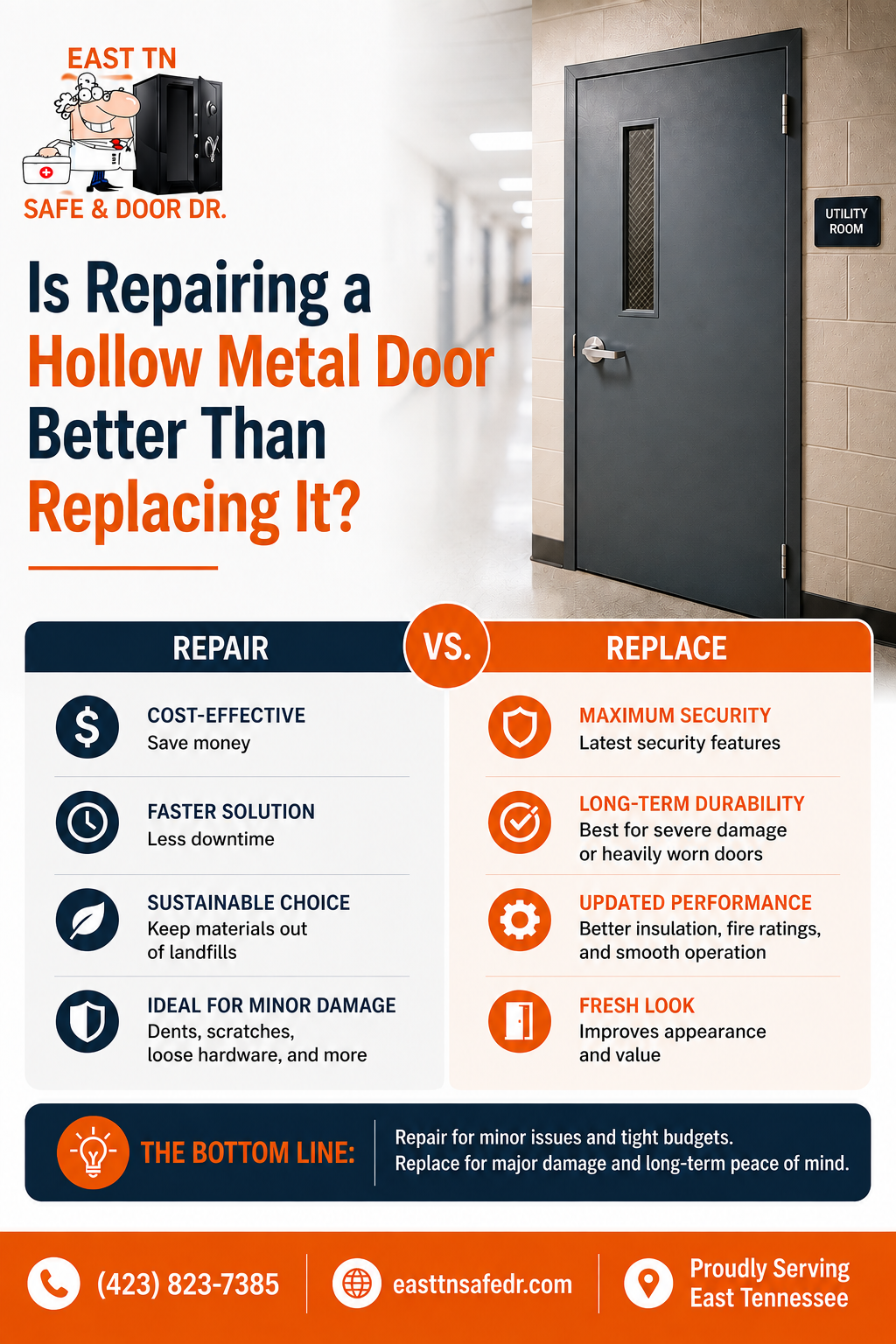
Summary: A hollow metal door does not always need replacement after damage. Repairs may be enough for dents, hardware problems, alignment issues, and minor surface damage when the door and frame remain structurally sound. East TN Safe & Door Dr can inspect the condition, explain repair or replacement options, and help restore safe, reliable door function.
A damaged metal door does not always need to go in the trash. In many cases, a solid repair can bring a hollow metal door back into good working shape. The right choice depends on the damage, door frame, hinges, lock, and overall condition. For property owners considering Hollow Metal Door Repair, a careful inspection can show whether repair is the smarter way to restore safety, function, and appearance.
Start With the Damage, Not the Replacement
A bent door can look worse than it really is. Scratches, dents, loose hinges, damaged hardware, or small frame problems may be repairable. Replacing the entire door may not be necessary when the main structure remains sound.
A professional should check the door first. This can help answer a simple question: Can the existing door still do its job safely and properly?
The answer often depends on the type and size of the damage.
For example, a small dent may be fixed. A bad hinge can be replaced. A damaged lock can often be repaired or changed. However, serious structural damage may call for a full replacement.
Common Problems That Can Be Repaired
Hollow metal doors are built to handle daily use. Still, repeated opening, slamming, impacts, weather, and normal wear can cause problems over time.
Some common issues include:
1. Dents or small bends in the door surface.
2. Loose or worn hinges.
3. Damaged locksets or door closers.
4. Misalignment between the door and frame.
5. Scratches, chipped paint, or surface rust.
6. Problems with the door sweep or seals.
The right repair depends on the cause.
Fixing only the visible mark may not solve the real issue. For example, a door that rubs against the frame could have a hinge or alignment problem.
When Repair Makes More Sense
Repair is often a good choice when the main door structure is still strong.
A repair can restore normal operation without removing the entire unit. This may also reduce disruption for a business, office, school, apartment building, or other property.
Repair may make sense when:
1. The door still fits the frame properly after correction.
2. The damage is limited to one area.
3. Hinges or hardware are the main problem.
4. The door skin has minor dents or scratches.
5. The frame remains in good condition.
6. The core and main structure are still sound.
A professional inspection can help confirm whether the door is a good repair candidate.
What Damage May Call for Replacement?
Repair has limits.
A door that has severe structural damage may not be safe to keep in service. Deep crushing, major bending, severe corrosion, or damage to important fire-rated components can be more serious.
A replacement may be the better option when the door cannot return to safe and proper operation through repair.
It is also important to consider fire-rated doors. Any repair or replacement work should maintain the required rating and follow applicable code and manufacturer requirements. Do not assume a door is safe simply because it can still open and close.
Why the Door Frame Matters So Much
People often focus on the door slab and forget about the frame. A damaged frame can make a good door work poorly. The door may stick, leave gaps, close unevenly, or put extra stress on the hinges.
Hardware Problems Can Be Easier to Fix
A door may seem broken when the real problem is a small hardware part. A worn hinge can change the door’s position. A weak closer can stop the door from closing correctly. A damaged latch can affect security.
Surface Damage Does Not Always Mean a New Door
A scratched or dented metal door may still have a strong structure underneath. Small dents can sometimes be repaired and the surface prepared for a new finish. Rust can also be addressed when caught early.
Leaving damage alone, however, can allow moisture to reach more areas of the metal. That is why even a small surface problem deserves attention when it starts to spread. Good maintenance can help keep a door working longer.
Security Should Stay at the Center
A door is not only a barrier. It is part of a property’s security system. A damaged lock, weak hinge, broken closer, or poorly aligned frame can affect how well the opening protects the building.
A Professional Inspection Can Prevent Guesswork
Choosing between repair and replacement can be difficult when you only look at the damage from a distance. A door professional can inspect the slab, frame, hinges, lock, closer, and other parts. The goal is to understand what caused the problem and what needs to be fixed.
East TN Safe & Door Dr can help property owners assess damaged doors and decide on a practical next step. A direct inspection can provide a clearer picture than guessing from a photo or visible dent. When the door is repairable, the service can focus on restoring the existing unit. When replacement is the safer choice, a professional can explain why.
What About American Security Safes?
Door and safe needs can sometimes overlap, especially for businesses and property owners dealing with security equipment.
If you have American Security Safes and need service or have questions about the equipment, you can contact our team for assistance. A professional can help you understand the available service options and determine what kind of help is needed.
How to Get More Life From a Metal Door
Basic care can help reduce future door problems. Check the hinges from time to time. Watch for rust. Make sure the door closes without scraping. Do not ignore a lock that starts sticking. Small problems are often easier to address early.
Keep the door and frame clean. Avoid forcing a door that is already hard to open or close. If a closer slams the door too hard, have it checked.
Repair or Replace? Let the Condition Decide
There is no single answer for every hollow metal door repair. A lightly damaged door may only need repair and adjustment. A badly bent or weakened door may be better replaced.
The safest choice comes from looking at the door’s actual condition. Think about structure, security, hardware, frame condition, and any fire or building requirements that apply.
Conclusion: The Right Repair Can Restore a Strong Door
So, is repairing a Hollow Metal Door better than replacing it? Often, yes, when the door and frame are still structurally sound. Small dents, hardware problems, alignment issues, and surface damage may be repairable. However, severe structural damage can make replacement the better choice. The first step is a professional inspection to understand the real problem and avoid replacing a door that could have been restored.
Have a damaged hollow metal door or a security concern? Contact East TN Safe & Door Dr at 423 823-7385 or easttnsafedr@yahoo.com for professional guidance, door repair service, and help choosing the right solution. Whether you need Safe Transport Moving solutions for security equipment or dependable door service, getting the right professional support can help protect your property and valuables. Let the condition of the equipment guide the solution, not guesswork.
Frequently Asked Questions
1. Can a hollow metal door be repaired?
Yes, hollow metal doors can often be repaired when the main structure, frame, and key safety parts remain in good condition.
2. When should a metal door be replaced instead of repaired?
Replacement may be better when the door has severe structural damage, major corrosion, or damage that cannot be safely corrected.
3. Can a dented hollow metal door be fixed?
Small dents may be repairable, depending on the depth, location, and overall condition of the door.
4. Why does a metal door stop closing properly?
Common causes include worn hinges, frame movement, a damaged closer, alignment problems, or debris around the opening.
5. How can I tell if my door frame is damaged?
Signs can include uneven gaps, rubbing, sticking, poor alignment, or a door that no longer closes or latches correctly.